
Ayurveda begins with
understanding the individual.
It is a system of medicine with its own methods of assessment, pharmacology and clinical training. Treatment comes later, once the physician has taken the time to understand the person receiving the care.
Individual
always


Ancient wisdom
for modern life
More than a treatment. A
complete system of medicine.
Ayurveda is often recognised through practices such as oil treatments or herbal preparations, but these are only one part of a much wider system.
Its practice begins with consultation and assessment, followed by medicines, treatments, and recommendations selected for the individual.
Rather than choosing a treatment first, Ayurveda begins by understanding the person.

Balance begins with
understanding
Everyone has Vata, Pitta
and Kapha, just not in the
same proportion.
Ayurveda describes three doshas: Vata, Pitta and Kapha. Every person has all three doshas, but not in equal proportions. The balance between them forms an individual constitution unique to each person.
This is why balance in Ayurveda does not mean making all three equal. It begins with understanding what is natural to the individual and how that balance may change over time.


If every person is
different, the care cannot
be identical.
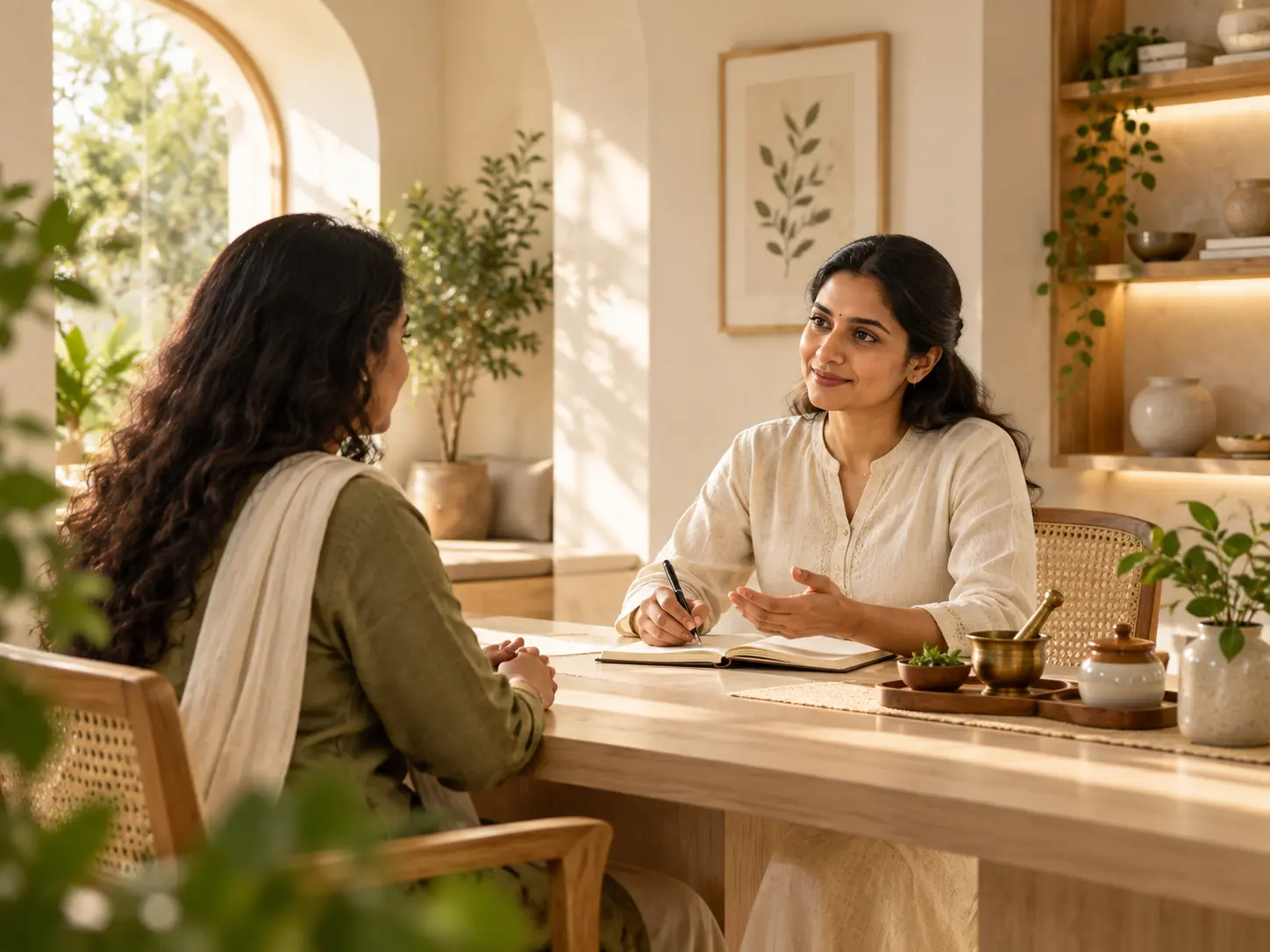
Your first appointment begins with a conversation. The physician may ask about your health history, daily routine, diet, sleep and other aspects of your lifestyle to build a fuller understanding of you.
Only after that assessment are treatments, medicines or changes to daily routines considered. What is appropriate for one person may not be appropriate for another, which is why the consultation always comes before the treatment.
It is studied before it is
practised.
Ayurvedic physicians undergo years of formal academic and clinical training before they begin practising.
The course of study takes approximately five and a half years, combining structured teaching, examinations and clinical training before qualification.
At Ahalia, that tradition of learning continues through Ahalia Ayurveda Medical College Hospital in Palakkad, where Ayurveda is taught alongside clinical practice.
This depth of study separates Ayurveda as a medical discipline from the treatments through which many people first encounter it.

Tradition creates
tomorrow
The consultation connects the
system to the individual.
Ayurvedic principles provide the framework, but the physician decides how those principles apply to the person sitting in front of them. That is why two people arriving with similar concerns may not receive the same plan of care. The physician considers the individual first, then decides what should follow. The treatment is not the starting point — the person is.